


In today’s competitive food and beverage market, packaging plays a critical role in brand identity and customer perception. Straw wrapping paper is no longer just a hygienic barrier; it has become a powerful branding tool. Custom logo printing on straw wrapping paper helps businesses differentiate their products, enhance brand recognition, and deliver a professional consumer experience.
However, printing logos on straw wrapping paper involves technical, material, regulatory, and cost considerations. This article explores the feasibility, methods, and business value of custom printed straw wrapping paper in detail.
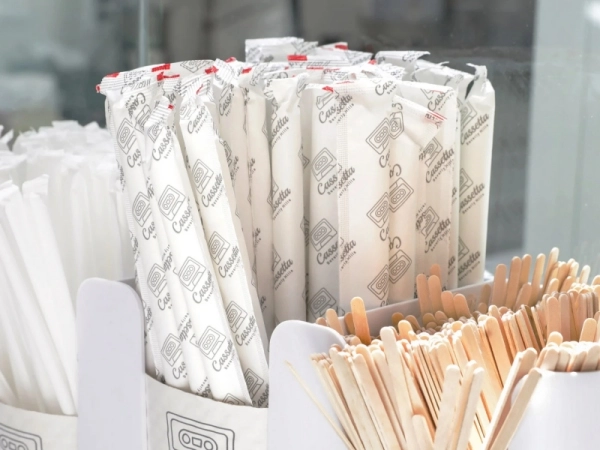
Printing Methods for Straw Wrapping Paper
Several printing technologies are used for straw wrapping paper, depending on production volume, design complexity, and budget.
Flexographic Printing
Flexographic printing is the most widely used method for straw packaging paper. It uses flexible plates and fast-drying inks, making it suitable for high-speed roll-to-roll production. Flexo printing is cost-effective for large orders and supports multi-color logos and patterns.
Gravure Printing
Gravure printing provides superior print quality and is ideal for complex designs with gradients and fine details. It is commonly used for premium straw wrapping paper but requires higher setup costs, making it more suitable for large-scale production runs.
Digital Printing
Digital printing is gaining popularity for small batches and customized designs. It requires no plates, making it ideal for startups or promotional campaigns. However, the unit cost is higher compared to traditional printing methods.
Choosing the right printing method depends on order volume, design requirements, and budget constraints.
How Paper Surface and Coating Affect Logo Printing Quality
The quality of logo printing on straw wrapping paper depends heavily on the paper substrate and surface treatment.
Paper Smoothness and Porosity
Smooth paper surfaces provide sharper and more consistent print results. Highly porous paper can absorb ink unevenly, leading to blurred logos and color inconsistencies.
Coated vs. Uncoated Straw Wrapping Paper
Coated straw wrapping paper offers better ink adhesion and color vibrancy. Common coatings include PE coating and water-based barrier coatings, which also improve moisture resistance.
Basis Weight and Paper Strength
Higher grammage paper improves durability during straw packaging and transport. Lightweight paper may wrinkle or tear, affecting logo appearance and perceived quality.
Manufacturers must balance print quality, cost, and environmental considerations when selecting paper materials.
Food Safety Requirements for Printed Straw Wrapping Paper
Since straw wrapping paper comes into direct contact with food and beverages, compliance with food safety regulations is essential.
Food-Grade Paper Standards
Printed straw wrapping paper must be made from food-grade paper that complies with FDA, EU, and other international food contact regulations. This includes restrictions on heavy metals, optical brighteners, and harmful chemicals.
Food-Grade Inks and Coatings
Inks used for logo printing must be low-migration and free from toxic substances. Water-based inks are widely used due to their safety and environmental benefits.
Compliance and Certification
Reputable manufacturers provide certificates such as FDA, FSC, PEFC, and ISO to ensure product safety and sustainability. Buyers should request compliance documentation when sourcing custom printed straw paper.
Food safety compliance not only protects consumers but also builds trust and reduces regulatory risks for brands.
MOQ and Cost Factors for Custom Printed Wrapping Paper
Custom logo printing involves several cost components that buyers should consider.
Minimum Order Quantity (MOQ)
Traditional printing methods such as flexographic and gravure require high MOQs due to plate and setup costs. Digital printing allows lower MOQs but at higher unit costs.
Setup and Plate Costs
Printing plates and cylinders contribute to initial setup costs. Multi-color logos require multiple plates, increasing expenses.
Material and Ink Costs
Coated paper, specialty inks, and eco-friendly materials can increase production costs. However, they often provide better performance and sustainability advantages.
Logistics and Lead Time
Custom printed straw wrapping paper typically requires longer lead times due to design approval, plate production, and printing. Buyers should plan procurement timelines accordingly.
Understanding these cost drivers helps businesses optimize packaging budgets and negotiate effectively with manufacturers.
How Custom Printed Straw Wrapping Paper Enhances Brand Recognition
Custom printed straw wrapping paper is a subtle but powerful branding tool in the food and beverage industry.
Brand Visibility at Point of Use
Printed logos on straw wrappers reinforce brand identity at the moment of consumption, especially in cafes, restaurants, and fast-food chains.
Professional and Premium Appearance
Customized packaging signals quality and professionalism, enhancing customer perception and brand credibility.
Marketing and Differentiation
In crowded markets, even small branding elements can differentiate a product. Custom printed straw paper supports brand storytelling and consistent visual identity across packaging materials.
Customer Engagement and Loyalty
Unique designs and branding on straw wrappers can improve customer experience and increase brand recall, contributing to long-term customer loyalty.


